
The holiday season brings parties, photos and reunions. If you are on a GLP-1 medication for weight loss, you may be thinking about more than the number on the scale. Skin tightening after GLP-1 weight loss is a real concern for many patients, alongside questions about facial volume loss, muscle preservation and how to look refreshed rather than depleted heading into December.
This article covers what weight loss does to fat, muscle and skin; how to protect skin quality and body composition while losing weight; and how to time in-clinic treatments so results are visible when they matter most.
The Real Holiday Math: Small Gains That Stick
A study by Yanovski et al. in the New England Journal of Medicine (2000) tracked 195 adults from late September through March. During the holiday interval, from mid-November to early January, the average weight gain was 0.37 kg, or about 0.8 pounds. That sounds small. The problem is what happened next: when a subset of participants was re-measured a full year later, the holiday weight had not come off. About 14% of participants gained more than 5 pounds during that single holiday stretch.
As a simple example (not a study finding): if someone gains just one pound each holiday season and never loses it, that adds up to 10 pounds over a decade of Thanksgivings, office parties and New Year’s dinners. For someone committed to a weight loss journey on GLP-1 medication, protecting your progress through party season takes a plan, not just willpower.
At Cosmetica Anti-Aging, Aesthetic Lasers & Medical Weight Loss Clinic, with locations in San Mateo, Los Gatos and Danville, our approach pairs medically supervised weight management with muscle support, skin tightening and facial volume planning. The goal: feel confident about your appearance, not just the number on the scale.
Weight Loss on GLP-1 Medication: Fat, Muscle and Skin All Change
GLP-1 medication supports weight loss by reducing appetite and helping people feel full sooner, which leads to eating fewer calories overall.
The STEP 1 clinical trial (Wilding et al., NEJM 2021) enrolled 1,961 adults with obesity or overweight plus at least one weight-related condition. Participants taking semaglutide 2.4 mg weekly, combined with lifestyle intervention, lost an average of 14.9% of body weight at 68 weeks. The placebo group lost about 2.4%. In a body composition substudy, fat mass dropped about 19.3% and visceral fat fell roughly 27.4%. Lean mass also declined by about 9.7%, a pattern common with any significant weight loss, not just GLP-1 therapy.
Skin elasticity relies on a structural matrix of collagen and elastin fibers. When fat disappears quickly, loose skin can develop because the support from the fat underneath has decreased faster than the skin can contract, and if people lose weight through aggressive calorie restriction, rapid caloric deficits can slow the skin’s ability to maintain and repair its extracellular matrix. Skin has a natural ability to snap back, but several factors affect how much it recovers: during weight gain, skin stretches to accommodate added volume, and over time that can weaken the skin’s natural elasticity, along with the effects of age, genetics, and the total amount of weight lost.
In the face, losing fat can mean less support under the skin, and after massive weight loss, that broader body-shape transformation can make laxity and hollowing more noticeable.
Areas where many patients notice changes after significant weight loss include:
- Face: hollower cheeks, deeper nasolabial folds, a tired appearance
- Neck area: sagging skin under the chin and along the jawline
- Upper arms: loose skin where fat previously provided fullness
- Abdomen: skin stretches with weight gain and may not fully retract after the fat underneath is gone
- Inner thighs: laxity that clothing cannot always mask
Protecting Muscle: Protein, Strength Training and Where Emsculpt NEO Fits
Lean muscle supports metabolism, posture and how skin drapes over the body. When muscle is lost alongside fat during weight loss, the reduction in structural support underneath can make sagging skin more visible.
A 2025 joint advisory from the American College of Lifestyle Medicine, American Society for Nutrition, Obesity Medicine Association and The Obesity Society recommends screening for muscle strength and body composition during GLP-1 therapy, along with adequate protein intake and regular strength training. Protein needs are individual; Cosmetica’s dietitian can tailor a nutrition plan based on your diet, eating habits and overall health.
Balanced nutrition with enough protein, vitamin C and other micronutrients supports the skin’s own collagen production, and staying hydrated matters alongside calories. These lifestyle changes can support skin health and body composition, but they do not eliminate significant laxity.
Muscle-protecting habits:
- Resistance training a few days per week helps preserve muscle mass and can improve the appearance of loose skin, especially when you focus on major muscle groups (legs, back, chest, arms)
- Bodyweight exercises, resistance bands or light free weights; check with your doctor before starting a new exercise routine
- Spreading protein across meals rather than loading it into one sitting
- Staying active between workouts with walking or movement breaks
Where Emsculpt NEO may fit in your plan:
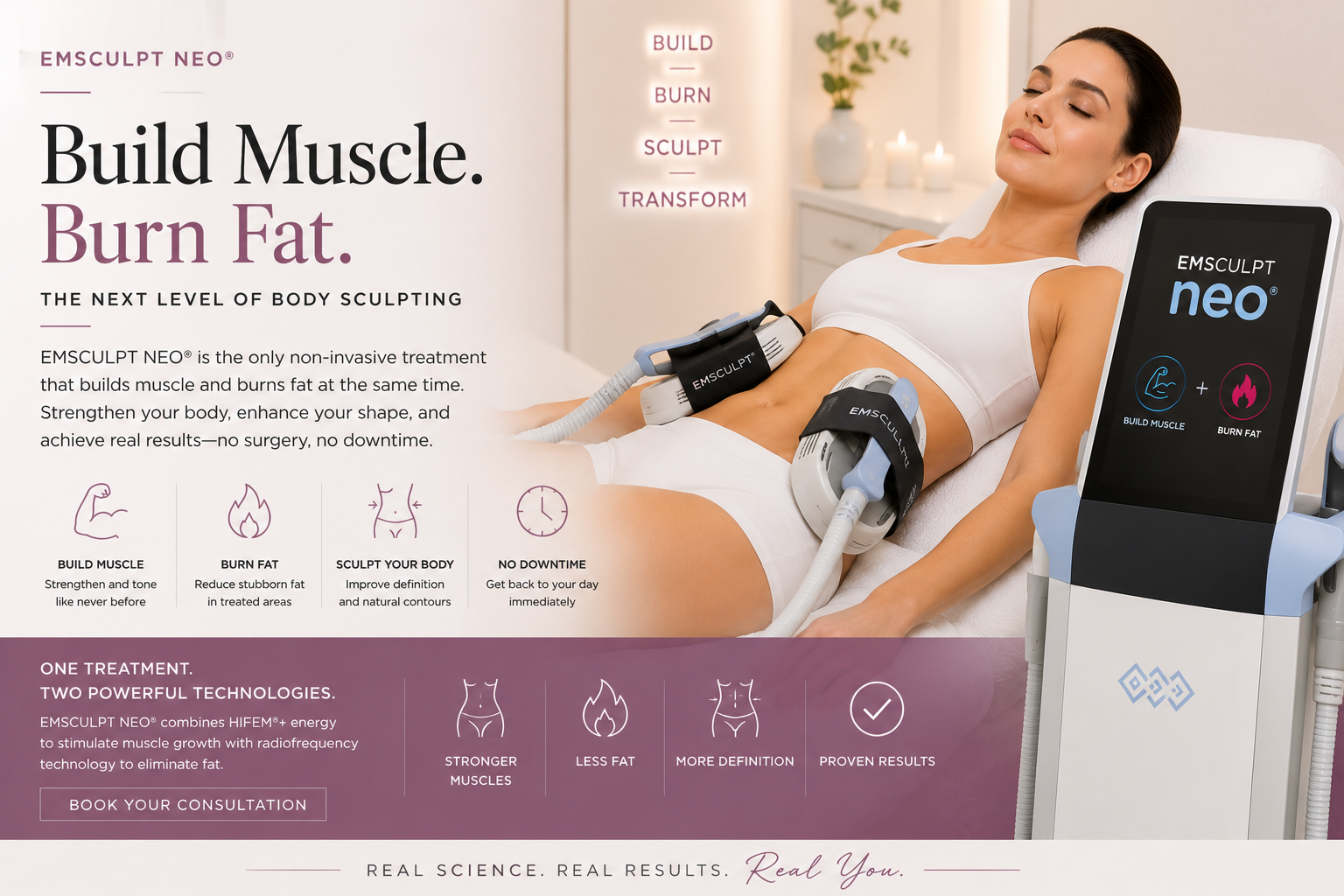
Emsculpt NEO, available at Cosmetica, combines electromagnetic muscle stimulation with radiofrequency to work specific areas such as the abdomen, buttocks and thighs. Small studies, many funded by the device manufacturer, have shown increases in treated muscle volume. The data are limited, and Emsculpt NEO is not shown to offset GLP-1-related muscle loss across the whole body. It is an add-on to exercise and nutrition, not a replacement for them.
When Sagging Skin Lags Behind: RF Microneedling with Secret Duo by Cutera
When weight comes off and the skin cannot keep pace, skincare products can improve texture, but they cannot reverse structural sagging. After weight loss, energy-based devices can stimulate tissue remodeling in cases of mild to moderate laxity, and RF microneedling can improve skin firmness and elasticity, which is where Secret Duo by Cutera fits.
Secret Duo combines RF microneedling with fractional laser resurfacing in one platform. The microneedles deliver radiofrequency energy into the deeper layers of the skin, where controlled heat stimulates new collagen and helps firm the skin over time, while the laser addresses surface texture.
What RF microneedling can do:
- Improve skin texture and smoothness
- Help tighten mild-to-moderate laxity on the face, neck and select body areas
- Stimulate new collagen over weeks to months
- Soften fine lines in treated areas
What RF microneedling cannot do:
- Remove large amounts of excess skin
- Replace a surgical facelift, body lift or skin removal for patients with significant laxity
- Produce identical results for every patient; age, skin quality and the amount of weight lost all affect outcomes
Treatment plans are decided at consultation based on area, skin type and goals; your provider determines the number of sessions, spacing and energy settings.
Restoring Facial Support and Skin Elasticity: Radiesse, Sculptra and Cellenis Derma
Holiday photos and gatherings bring a common concern for people on GLP-1 medication: the face looks hollower, lines around the mouth are deeper, and the overall appearance reads as tired even when they feel healthier than they have in years.
Radiesse is a calcium hydroxylapatite injectable used in the face and hands to add structure and stimulate collagen over time. A provider might choose Radiesse when structural support is needed in the cheeks and other appropriate facial areas.
Sculptra is a poly-L-lactic acid injectable that works gradually. Rather than filling one specific fold, it encourages collagen production across broader facial areas, restoring diffuse volume over weeks to months. Collagen-stimulating injectables like Sculptra and Radiesse work this way, which is why results develop slowly and look subtle.
Cellenis Derma is an autologous bio-filler made from the patient’s own platelet-rich plasma. It appeals to people who prefer an option made from their own blood. Its effects tend to be subtle and depend on how each person responds. Hyaluronic acid fillers can enhance appearance after significant weight loss when targeted correction is needed.
All of these are customized and subtle, tailored to facial shape and the patient’s weight-loss pattern. Filler treatments are often staged until weight stabilizes to avoid over- or under-correction. Learn more about how GLP-1 weight loss can change your face.
Timing Your Treatments Around Party Season
Collagen-stimulating treatments build results gradually: early changes may appear over several weeks, with fuller results over a few months. Starting now, in mid-to-late fall, gives those results time to begin developing before December events, and they keep improving into the new year.
- Now (October to early November): Book your consultation. Complete a body composition scan, evaluate skin laxity and volume loss, and begin any treatment series or collagen stimulators.
- Late November: Continue planned sessions. Maintain strength training and steady nutrition through holiday meals, with a focus on protein and hydration.
- 1 to 2 weeks before a big event: Avoid starting new treatments that may cause temporary redness, swelling or bruising. This window is for maintenance, not new procedures.
If you are still actively losing weight versus close to a stable weight, your provider will adjust the plan. Volume treatments such as fillers often work best once weight has leveled, because continued fat loss could shift the correction. Skin tightening can begin during active weight loss if laxity is already a concern.
It is never too late to start. A plan begun in November keeps working through the winter and into spring.
Safety and Who Is a Good Candidate
No treatment is risk-free. A medical consultation is essential before any procedure.
In October 2025, the FDA issued a safety communication on RF microneedling devices, reporting risks including burns, scarring, fat loss, disfigurement and nerve damage. For people already losing facial fat on GLP-1 medication, choosing an experienced medical provider who customizes energy settings is especially important.
Cosmetica’s safety approach includes a thorough medical and skin evaluation, customized treatment settings based on skin type and area, and clear aftercare instructions to reduce risk.
Non-surgical treatments have limits. People with large amounts of hanging excess skin after major weight loss may need surgical options, such as a tummy tuck, arm lift or body lift, performed by a board-certified plastic surgeon. A consultation can help you understand which approach is realistic for you.
Good candidates for non-surgical skin tightening after GLP-1 weight loss generally have medically supervised weight loss that is progressing steadily, good overall health, and realistic expectations about what non-invasive treatments can achieve. Some conditions, such as pregnancy, may mean postponing treatment. Results vary; what is right for one person may not be right for another.
Building Your Plan at Our San Mateo, Los Gatos and Danville Clinics
Here is what to expect at your first visit:
- Medical history and weight-loss history review, including any current GLP-1 medication use
- A Mediana body composition scan to track fat mass and lean mass over time
- Skin and facial assessment for laxity, volume loss and skin health
Cosmetica’s medical weight loss program can include ongoing medical supervision, dietitian support for protein and nutrition, and body-sculpting options like Emsculpt NEO where appropriate.
Everything comes together in one seasonal plan as part of your wellness journey: your weight-loss pace through the holidays, treatment scheduling around personal events, and a maintenance strategy for after the new year. Whether you are just beginning or close to your goal, the plan adjusts to where you are.
If you are in San Mateo, Los Gatos, Danville or anywhere in the Bay Area, book a consultation by phone or online. The first step toward looking and feeling your best this season is a conversation about your goals.
Frequently Asked Questions About GLP-1, Loose Skin and Holiday Timing
Can I start skin treatments while still losing weight? Many patients can begin treatments such as RF microneedling while weight is still coming down. Volume-adding injectables are often better timed once you are closer to a stable weight. Your provider decides at consultation based on your progress and goals.
Will loose skin go away on its own? Mild skin laxity and loose or sagging skin may improve somewhat over time, particularly in younger adults. More significant loose skin often remains and, after someone loses a lot of weight, usually requires more than time and topical care; surgery may be the most effective option. Age, genetics and the total weight lost all influence the outcome.
Does GLP-1 medication cause muscle loss? Weight lost on GLP-1 medication includes some lean mass, as with most forms of significant weight loss. Protein, strength training and body composition monitoring through tools like the Mediana scan help limit that loss.
Is “Ozempic face” a medical diagnosis? No. It is a popular term for facial volume loss that can follow rapid weight loss. The underlying cause is the loss of facial fat and structural support, not the name of any specific medication.
How soon before a holiday event should I book? Earlier is better. Collagen-building treatments develop over weeks to months, so booking a consultation in October or November gives results time to start appearing before December events. Even starting later is worthwhile; benefits continue to build into the new year.