
Questions about antibiotic ointment for tattoo removal often come up after a laser session, when the treated skin changes and the aftercare sheet is close at hand. The useful answer is not a universal product or schedule: the instructions should come from the professional who knows what was done and can clarify the plan for your specific appointment.
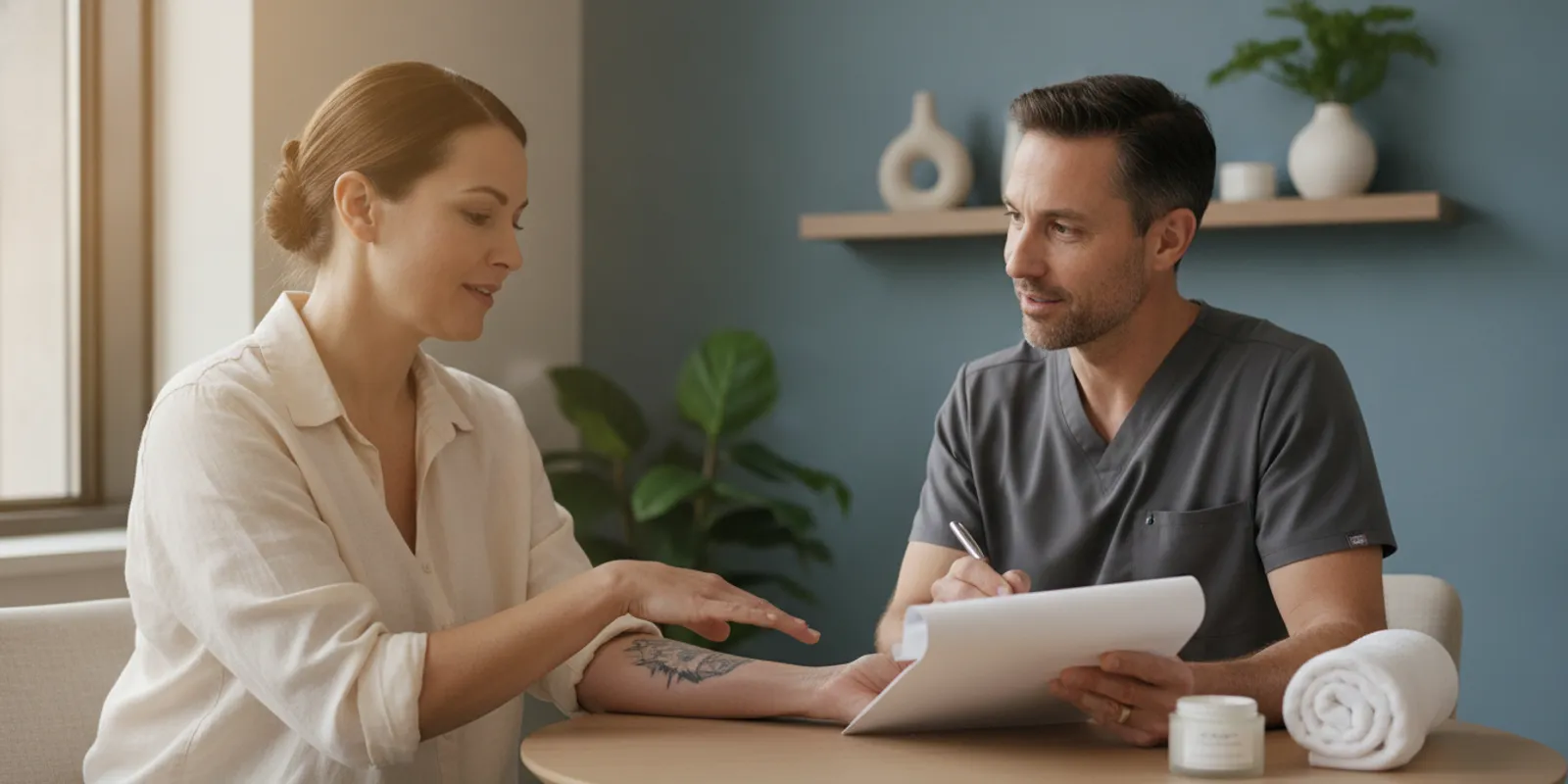
Why is there not one ointment instruction for every tattoo-removal visit?
Aftercare advice can depend on the treatment approach, the skin’s appearance afterward, the products used, and the instructions of the professional who performed the session. A general online article cannot see the treated area, review your appointment details, or determine whether a particular ointment is appropriate for you. That is why a product recommendation that appears in a post or discussion should not replace the instructions you received from your clinic.
It also helps to separate a question about whether an ointment is part of your plan from a question about which one or how long. Those are specific care decisions. If the aftercare sheet mentions an ointment but does not name a product, or your understanding differs from what you remember hearing, contact the clinic and ask for clarification rather than choosing based on a familiar brand.
The American Academy of Dermatology describes post-laser tattoo-removal care in general terms, noting that care may include washing the area and applying ointment for a few days, as well as moisturizing and covering it while it heals. That overview does not establish that the same product, timing, or steps suit every person or every session. Use it as context for a conversation, not as a substitute for your own treatment instructions: AAD overview of laser tattoo removal.
What should you ask about antibiotic ointment for tattoo removal?
Keep the conversation concrete. The goal is to understand the instructions your clinic intends for you, including what to do if the written directions and your recollection do not match. These questions can help make the plan clear without asking a general article to make a personal care decision.
- Is an ointment part of my aftercare plan? Ask whether your specific session instructions include one, or whether another approach is intended.
- Which product do you mean? If an ointment is recommended, request its exact name and any details needed to identify it. Do not assume that different products with similar packaging or labels are interchangeable.
- How should I follow the instructions you gave me? Ask the clinic to restate the application details and the period for which they want you to follow the plan. Do not fill in missing directions from another person’s experience.
- What should I do if I have a product concern? Tell the professional about a known allergy, prior reaction, or other concern before using a product you are unsure about. Ask what they want you to do next.
- Whom should I contact if the area changes or I have a question later? Confirm the right contact route and what information the team needs to respond.
Writing these questions down before contacting the clinic can make a short phone call or message more useful. If you are still deciding whether to arrange a visit, review the clinic’s tattoo removal information and bring any aftercare questions to a consultation.
How can you make sense of written aftercare directions?
Instructions can feel hard to interpret when they use unfamiliar terms, mention more than one type of product, or leave out a detail you thought you heard during the appointment. Rather than treating an incomplete phrase as permission to improvise, ask the clinic to explain the exact part that is unclear. It may help to have the sheet in front of you while you call or send a message.
Check the directions for the product name, the part of the routine it applies to, the time frame, and any instructions about follow-up. If one of those details is missing or seems to conflict with another instruction, point out the mismatch. You do not need to resolve it by comparing your directions with a friend’s or a social-media post.
For example, if a handout mentions “ointment” without naming one, ask whether the professional wants you to use a particular product. If you were given a product name but are unsure you have the right item, ask the clinic to confirm. If you have already started following one set of directions and then notice another, explain what you understood and ask how they want you to proceed. The purpose is not to diagnose a reaction yourself; it is to make sure the person guiding your care understands the question.
A simple note can help you keep the conversation organized: the date of your session, the wording you are unsure about, the product name if you have it, and the question you need answered. Share only the details the clinic asks for through its usual contact method. For more context about the service and questions to raise before booking, see Cosmetica’s tattoo removal consultation page.
What is the difference between general information and your clinic’s plan?
General information can explain why aftercare is worth discussing, but it cannot account for the specifics of an individual appointment. A research article, medical organization page, online forum, and clinic handout may address different contexts. Even when a source describes a common practice, it does not necessarily mean that practice is right for your case.
Use online material as a prompt for questions, not as a replacement for the directions you received. Be especially cautious about instructions that offer a fixed product and routine for everyone, or that advise changing a clinic’s plan without asking. If an external source appears to conflict with your aftercare sheet, show or describe the source to your treating professional and ask how it applies to your situation.
It can be helpful to ask the professional to distinguish what is a routine part of your written plan from what would be a reason to call back. That conversation gives you a clearer route for follow-up without relying on generic checklists. When considering a future session, Cosmetica’s tattoo removal service page is a place to start learning about the service and arranging a conversation.
Which questions are useful to ask before you leave?
When aftercare information is discussed at the appointment, a few direct questions can prevent uncertainty later. This table can help you organize the conversation; it is not an aftercare protocol or a list of instructions to apply on your own.
| Topic to clarify | Question to ask | Why it helps |
|---|---|---|
| Product | Is an ointment included in my plan, and what exact product do you mean? | Helps avoid guessing between products or assuming a familiar item is the intended one. |
| Directions | What details should I follow, and for what period? | Lets the professional clarify information that may be incomplete or hard to remember. |
| Personal concern | What should I tell you about a prior product concern or reaction? | Gives the clinic context relevant to its guidance before you act on an uncertain instruction. |
| Follow-up | Who should I contact if I have a question after I leave? | Establishes a direct route for questions about your individual appointment. |
Beyond the product itself, confirm what written instructions you will receive, who to contact if something is unclear, and whether the clinic prefers a call or another method for follow-up questions. If an ointment is mentioned, ask for the exact details rather than relying on memory.
It is also reasonable to ask what the clinic means by the words in its instructions. For instance, ask which step comes first if the sheet includes multiple steps, whether an instruction applies to the treated area or another part of your routine, and how the clinic wants you to handle a missed or misunderstood step. These are clarification questions, not a request for an online writer to personalize care.
If the answer is not clear, say which part remains uncertain and ask for it to be restated. You can repeat the direction back in your own words and ask whether you understood it correctly. A clear written note can also help you remember the response once you are home.
What information can you have ready when you contact the clinic?
A short, organized message can help the team understand exactly what you need clarified. Start with the date of the treatment and explain which written direction prompted your question. If the wording is unclear, quote the sentence rather than paraphrasing it. You can say that you are asking whether an ointment is part of your own plan, asking for the exact product name, or trying to understand a timeframe. Keeping the question focused makes it easier for the professional to respond to the issue at hand.
If your question concerns a product you were told to use, have its name or packaging details available so you can confirm whether it matches the instruction. If you have not used it, say so; if you have already followed a direction and are now uncertain, explain that plainly. Do not omit a product concern because you are unsure whether it matters. The clinic can tell you what details it needs and whether the question should be handled by a provider.
Use the contact route the clinic gave you, and avoid sending sensitive information through a channel the clinic has not approved. If you leave a message, include a reliable way for the clinic to respond and ask what to do if you do not hear back within its usual response window. Do not assume that a social media comment or a general website article creates a direct care relationship. The person familiar with your session is the appropriate source for clarifying your individual aftercare directions.
How can you use a consultation to understand the aftercare process?
If you are considering tattoo removal but have not booked a session, ask about the process for receiving aftercare information before deciding whether to proceed. You can ask who will explain the directions, whether written information is provided, how questions after the visit are handled, and what the clinic recommends if a detail is unclear later. This helps you know how to seek clarification without asking a consultation to promise a particular course of healing.
It can also help to ask how the clinic distinguishes general information from instructions specific to a session. Ask whether the aftercare information may vary from one appointment to another and how you will know which directions apply to you. You can note your questions in advance and bring them to the conversation. If the service itself is new to you, ask about the treatment process, what topics are covered in the consultation, and what you should understand before making a decision.
Cosmetica’s tattoo-removal service information can be a starting point for that discussion. It does not replace a conversation about your personal care plan, and the consultation is the opportunity to raise questions with the team. You can review the tattoo removal consultation page, then ask the clinic how it communicates aftercare details and handles follow-up.
When should you contact the treating clinic?
Contact the professional who treated you when the aftercare directions are missing, difficult to interpret, or seem inconsistent with something you were told. Reach out as well if you have a concern about a product, are unsure whether a change in the area fits the instructions you were given, or need to know what follow-up they recommend. The clinic can consider your session details and explain the next step.
If you believe you may need urgent medical attention, seek appropriate medical care rather than waiting for a routine response from a cosmetic clinic. This article cannot assess symptoms or determine urgency. For non-urgent questions about your individual aftercare, contact the treating professional and describe what you are noticing; do not rely on an online checklist to decide what a change means.
Before your appointment, make sure you know the clinic’s preferred contact process and whether you should send a message or call with aftercare questions. If you are exploring treatment, a tattoo removal consultation offers an opportunity to discuss the service, ask what follow-up information is provided, and understand the consultation process before making a decision.
Questions about antibiotic ointment after tattoo removal
Does everyone need antibiotic ointment after laser tattoo removal?
This article cannot determine whether an ointment belongs in your plan. Aftercare directions vary, and the treating professional is the right person to clarify whether one is intended for your session and which product, if any, they recommend.
Can I use an ointment I already have at home?
Do not assume that a product you already own matches the clinic’s instructions. Ask the professional to confirm the product and clarify any concerns before relying on it as part of your aftercare.
What if my aftercare sheet and what I remember hearing are different?
Contact the clinic, describe the discrepancy, and ask which direction to follow. Keep the sheet available so you can refer to the exact wording. Avoid choosing between conflicting instructions based on a general article or another person’s experience.
Can an online article tell me how long to use ointment?
No general article can set an individual schedule. Ask the professional familiar with your appointment to clarify the timeframe in your instructions and what to do if a detail is not specified.
What if I cannot find the product named in my instructions?
Contact the clinic and ask how they want you to proceed before substituting another product. Share the exact name or details you have, and let the professional clarify whether it matches the plan or suggest the next step for your situation.
Antibiotic ointment for tattoo removal is a question to resolve with the professional who knows your session and aftercare plan. When directions are unclear, ask for specific clarification instead of guessing or applying advice written for someone else.