
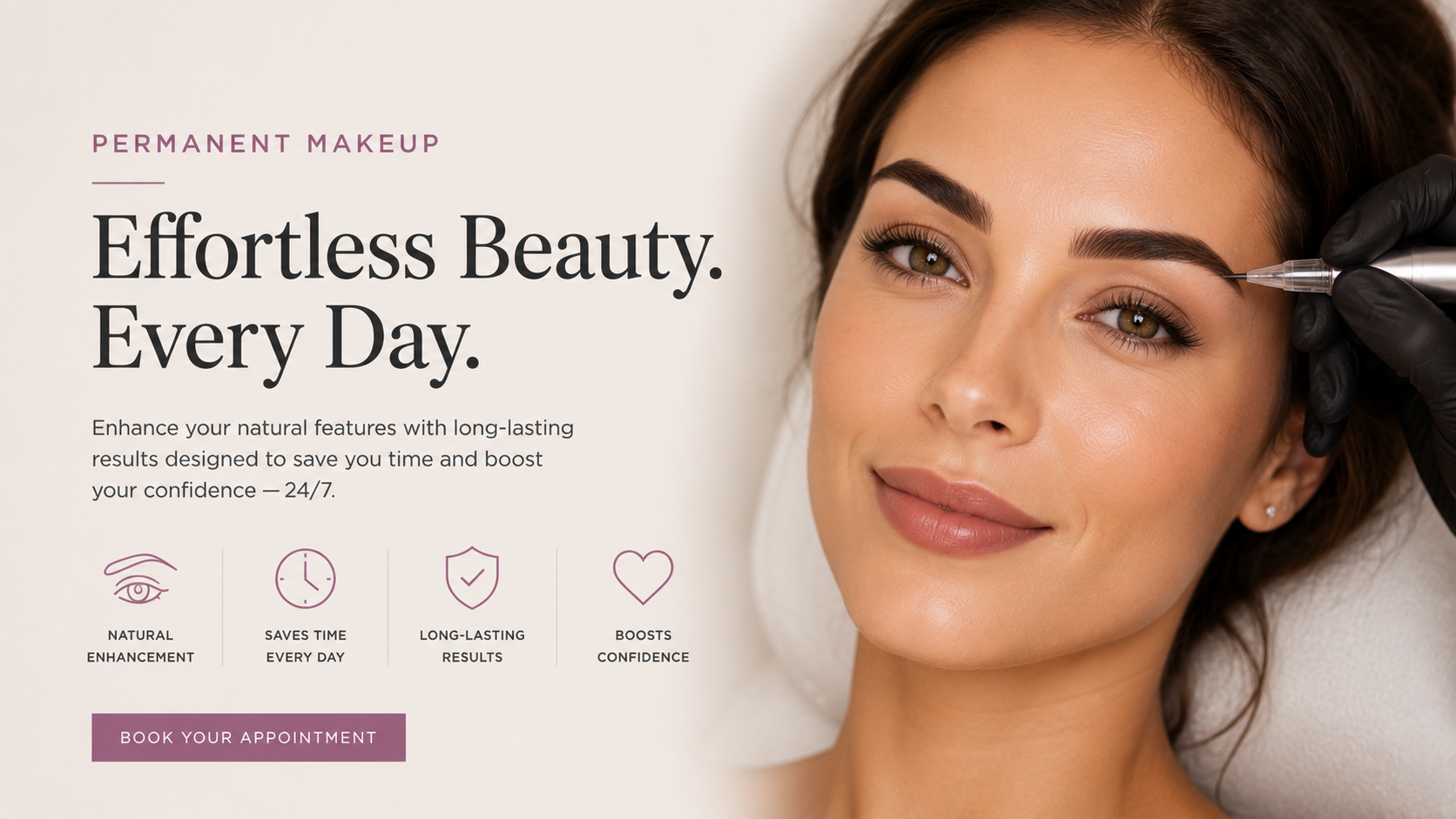
The Complete Guide to Permanent Makeup: Benefits, Types, and What to Expect in 2026
Introduction
Permanent makeup is a cosmetic tattooing technique that deposits specialized pigments into the upper dermal layer of skin to enhance facial features like eyebrows, eyeliner, and lips. Often referred to as micropigmentation or permanent cosmetics, it offers a semi-permanent solution for anyone who wants to wake up with a polished appearance every single day without the daily hassle of conventional makeup application.
This guide covers everything you need to know before you choose permanent makeup: the different types of procedures available, how the application process works, safety considerations, maintenance requirements, and realistic cost expectations. It is designed for individuals considering permanent cosmetic makeup for convenience, medical reasons, or simply a more consistent look – whether you’re a busy professional, someone managing a condition like alopecia, or a person who wants smudge-proof results that match an active lifestyle.
In short: Permanent makeup is a semi-permanent cosmetic tattooing process where results typically last 1 to 3 years, significantly reducing daily beauty routine time while delivering waterproof, natural-looking enhancement that holds up through sweat, swimming, and sun exposure.
By the end of this guide, you will:
- Understand the differences among permanent eyebrows, permanent eyeliner, permanent lip makeup, and paramedical services
- Know exactly what happens during the procedure – from consultation through healing
- Learn critical safety considerations and how to mitigate risks
- Discover maintenance timelines, touch up schedules, and realistic costs
- Have the confidence to make an informed decision about permanent cosmetics for your needs
Understanding Permanent Makeup Fundamentals
Permanent makeup – also referred to as micropigmentation or cosmetic tattooing – is the process of implanting colored pigment into the superficial dermal layer of skin using fine needles. The result enhances facial features such as brows, eyeliner, and lip color with long-lasting definition that mimics the appearance of expertly applied traditional makeup.
Its relevance extends well beyond aesthetics. Permanent makeup is beneficial for individuals with conditions like alopecia or mobility issues, as it helps individuals with disabilities apply makeup easily. Permanent makeup can also restore color lost due to medical conditions, correct asymmetry, and define eyebrows for a more balanced facial appearance. Permanent makeup is increasingly viewed as a lifestyle choice rather than a trend – a practical investment in time, confidence, and daily convenience.
How Permanent Makeup Works
During a permanent makeup procedure, a skilled technician uses specialized tools – either a hand-held microblade or a digital rotary machine – to deposit pigment into the upper papillary dermis. Permanent makeup uses specialized pigments rather than traditional body tattoo ink, and permanent makeup techniques include traditional tattoo machines and hand methods. The depth of pigment placement is shallower than conventional body tattoos, which is why permanent makeup is less invasive than traditional tattoos, allowing a softer appearance that fades gradually over time.
Results of permanent makeup typically last one to five years before fading, though the most common duration falls within the 1 to 3 year range. The rate of fading depends on several factors: skin type (oily skin tends to blur fine strokes and accelerate fading), sun exposure, lifestyle habits like sweating and use of skincare acids, and the quality of the pigment itself. Iron oxide-based pigments, now the standard in quality studios, are designed to fade more predictably than older synthetic formulations.
Semi-Permanent vs. Traditional Makeup
The core difference is simple: conventional makeup washes off at the end of each day and is subject to smudging, smearing, and reapplication. Permanent cosmetics replace or dramatically reduce that routine, delivering consistent enhancement that stays intact through workouts, rain, and sleep.
Permanent makeup saves time on daily beauty routines – often 15-30 minutes per day – and permanent makeup is waterproof and smudge-proof, ideal for active lifestyles. For someone who spends even 20 minutes each morning on brows, eyeliner, and lip color, that adds up to over 120 hours per year reclaimed. The trade-off is a commitment to professional application, a healing process, and periodic touch up appointments to maintain vibrancy.
Understanding these fundamentals sets the stage for exploring the specific types of permanent makeup services available and which might be the right fit for your features, skin tone, and goals.
Types of Permanent Makeup Services
With the foundational science covered, let’s examine the specific permanent makeup applications that address different areas of the face – each with its own technique, longevity, and ideal candidate profile.
Permanent Eyebrows
Permanent eyebrows are the most popular PMU service, and several distinct techniques exist to achieve different effects:
- Microblading: This technique involves using fine needles to carefully draw hair-like strokes that closely resemble natural eyebrow hairs, providing a realistic and detailed appearance.
- Microblading creates realistic hair strokes for eyebrows and is best suited for normal to dry skin types. Microblading can last from 1 to 3 years depending on skin type, with touch-ups for microblading recommended every 12 to 18 months. Microblading costs between $600 to $1,000.
- Powder Brows: Powder brows create a filled-in effect using a digital machine for a soft appearance, producing a look similar to expertly applied brow powder. This method delivers excellent pigment retention, especially on oily and mature skin, typically lasting 2-3 years between touch ups.
- Ombre Brows: Ombre brows blend microblading and machine application for a defined look – lighter, more natural strokes at the front of the brow transitioning to deeper, fuller shading toward the tail.
- Combination / Hybrid Brows: These merge hair strokes with shading to achieve both realism and density. A great option for clients who want the best of both worlds, with longevity of roughly 18-30 months.
Eyebrow procedures generally cost about $650, making them accessible as a long-term investment in your daily appearance. The technique your technician recommends will depend on your skin type, hair density, desired shape, and lifestyle factors.
Permanent Eyeliner
Permanent eyeliner enhances lash lines for a fuller look, creating the appearance of perfectly applied liner without any risk of midday smudging. Options range from subtle lash line enhancement (pigment deposited between the lashes for a natural look) to full eyeliner or even winged styles for more dramatic definition.
Permanent eyeliner can last from one to three years, and it is ideal for anyone who regularly uses eyeliner and wants smudge-proof results that survive workouts, humidity, and long days. Because eyelid skin is particularly sensitive and delicate, precision and sterile technique are especially critical for this procedure. Permanent eyeliner typically costs around $600, depending on the complexity of the style chosen.
For those interested in complementary eye-area services, eyelash extensions and brow tinting can pair beautifully with permanent eyeliner for a complete, low-maintenance eye look.
Permanent Lip Color and Lip Blushing
Lip blushing provides a natural tint to lips, enhancing their natural color, defining the lip line, correcting asymmetry, and creating a soft wash of color that looks like a just-applied lip stain. Unlike bold lip tattoos of previous decades, modern lip blushing creates subtle, customizable results tailored to each patient’s preferred shade and skin tone.
Lip blushing results typically last 1 to 3 years, though some clients experience retention up to 5 years with excellent aftercare and limited sun exposure. Lip blushing requires multiple sessions for desired color intensity – typically an initial application followed by at least one touch up 6-8 weeks later. Lip blushing ranges from $450 to $1,400, with most sessions in the Bay Area falling between $550 and $1,000.
Key considerations for permanent lip makeup include disclosing any history of cold sores (herpes simplex can reactivate during the healing process), allowing adequate time after lip filler procedures, and understanding that the treated area will appear darker initially before settling into its final, softer shade.
Specialized Services
Beyond the standard eyebrows, eyeliner, and lips, several other types of permanent cosmetics address medical and aesthetic needs:
- Scar camouflage uses flesh-colored pigment to mask scars from surgery, burns, or injuries, blending the scar tissue with surrounding skin tone. Scar camouflage can cost between $2,500 to $4,500, reflecting the advanced technical skill required.
- Areola repigmentation restores natural-looking color and shape following mastectomy or breast surgery – a deeply meaningful service for many patients.
- Freckle tattoos replicate natural freckles on the skin for a sun-kissed, youthful appearance without UV damage.
- Vitiligo camouflage blends depigmented patches with surrounding skin, creating a more uniform appearance.
These paramedical applications require higher technical expertise and sometimes medical oversight, which is why having them performed in a medical spa environment with trained professionals is essential.
The Permanent Makeup Process at Cosmetica Anti-Aging, Aesthetic Lasers & Medical Weight Loss Clinic
Professional permanent makeup demands more than artistic skill – it requires a clinical environment with medical oversight, sterile protocols, and certified technicians. Here’s what the process looks like from the moment you schedule your appointment.
Consultation and Design Process
Every permanent makeup journey begins with a thorough consultation, which typically covers:
- Health assessment and suitability evaluation – Your technician reviews your medical history, including allergies, skin conditions, medications, history of keloids or cold sores, recent Botox or fillers, and pregnancy status. This determines whether you’re a suitable candidate and identifies any risks that need to be managed.
- Color selection based on skin tone and preferences – Pigment is matched to your natural undertones, hair color, and desired outcome. Your artist will explain how pigment oxidizes during healing and how certain colors may shift over time, ensuring you’re confident in the selection before any work begins.
- Shape mapping and design approval – Using facial symmetry principles, bone structure analysis, and precise measurement tools, the technician maps the desired shape directly on your face. You approve the design before the procedure begins – nothing is permanent until you’re satisfied with the preview.
- Procedure explanation and consent process – You’ll receive a complete explanation of what to expect during and after the procedure, including healing timelines, aftercare requirements, and touch up scheduling. Consent forms cover all potential risks and expected outcomes.
At Cosmetica Anti-Aging, Aesthetic Lasers & Medical Weight Loss Clinic, consultations are conducted by experienced team members who understand both the artistry and the clinical requirements of cosmetic tattooing.
Application Techniques Comparison
Choosing the right technique depends on your skin type, the feature being enhanced, and the final look you prefer. Here’s a comparison of the primary methods:
| Criterion | Microblading (Hand Tool) | Machine / Nano Brows | Powder / Ombre Brows |
|---|---|---|---|
| Tool | Hand-held blade with fine needles | Digital pen with single or fine-cluster needles | PMU machine applying pixelated dots |
| Pain Level | Mild to moderate; topical numbing applied | Mild; less trauma than hand blade | Generally lowest discomfort |
| Healing Time | 7-14 days scabbing; fully healed at 4-6 weeks | Similar to microblading, often smoother healing | 7-10 days redness/flaking; settled by 4-6 weeks |
| Longevity | 1-3 years depending on skin type | 1-3 years | 2-3 years; often longest retention |
| Best For | Natural hair strokes; dry to normal skin | Fine strokes; oily, mature, or sensitive skin | Filled-in, makeup-like look; all skin types |
The healing process for permanent makeup can take one to eight weeks depending on the procedure. During the initial days, expect the treated area to appear darker and bolder than the final result. By weeks 2-4, a “ghosting” phase occurs where color appears lighter as skin regenerates. The pigment fully settles at 4-6 weeks, at which point your technician can assess whether a touch up session is needed.
Permanent makeup can boost self-confidence by providing a polished appearance that looks natural and requires zero effort on any given single day.
Common Challenges and Solutions
Understanding potential concerns before your procedure helps you prepare and ensures the best possible outcome. Here are the most common challenges and how they’re addressed.
Pain and Discomfort Concerns
Most patients describe the sensation as mild pressure or light scratching rather than sharp pain. Professional technicians apply topical anesthetic (numbing cream) before and during the procedure to minimize discomfort significantly. The level of sensation varies by location – lips and eyeliner areas tend to be more sensitive than brows – but skilled application technique and proper numbing make the process manageable for the vast majority of clients.
Color Fading and Maintenance
All permanent cosmetics fade over time. Lifestyle factors accelerate this process: sun exposure, smoking, acid exfoliants, heavy sweating, and certain skincare products can all reduce pigment retention. The solution is straightforward – scheduled touch ups maintain vibrant color and shape integrity. For brows, plan on refresher appointments every 12-18 months. For lips and eyeliner, touch ups every 2-3 years typically suffice.
Using SPF on the treated area after it’s fully healed, avoiding harsh exfoliants directly on pigmented skin, and following your technician’s aftercare instructions will maximize longevity between sessions.
Safety and Infection Risks
Permanent makeup can cause allergic reactions to pigments, and infection is a risk with any permanent makeup procedure. Improper technique can lead to pigment migration in the skin, while FDA regulates inks used in permanent makeup as cosmetics – though notably, no pigments have been specifically approved for intradermal injection.
The solution is choosing a licensed medical spa environment with strict sterilization protocols. At Cosmetica Anti-Aging, Aesthetic Lasers & Medical Weight Loss Clinic, all procedures use single-use sterile needles, certified pigment brands tested for heavy metal and microbial safety, and infection control protocols aligned with California state health codes. Patch testing is available for clients with sensitive skin or known allergies, and medical oversight provides an additional layer of safety that a typical salon cannot offer.
Permanent makeup can be difficult or impossible to remove, which makes choosing the right provider critical. If correction is ever needed, permanent makeup removal and laser tattoo removal options are available, though they require multiple sessions and additional cost.
Conclusion and Next Steps
Permanent makeup is a convenient, confidence-boosting, semi-permanent enhancement that delivers real results when performed by qualified professionals in a clinical setting. Whether you’re considering permanent eyebrows to fill in sparse brows, permanent eyeliner for effortless eye definition, or lip blushing for a natural tint that lasts, the key to a successful outcome lies in choosing an experienced artist, understanding the healing process, and committing to proper aftercare and touch up maintenance.
Here’s how to move forward:
- Schedule a consultation at Cosmetica Anti-Aging, Aesthetic Lasers & Medical Weight Loss Clinic in Danville, San Mateo, or Los Gatos to discuss your goals and assess your candidacy
- Research your desired permanent makeup type – review the techniques above and prepare questions about pigment options, expected results for your skin type, and healing timelines
- Book your appointment or call (925) 886-4020 to discuss pricing options and availability
If you’re exploring other ways to enhance your appearance with minimal daily effort, Cosmetica Anti-Aging, Aesthetic Lasers & Medical Weight Loss Clinic also offers complementary med spa treatments including dermal fillers, Botox, and brow shaping services that pair well with permanent cosmetics.
Additional Resources
Healing Timeline at a Glance:
- Days 0-3: Swelling, redness, and bold color (darker than final result)
- Days 4-10: Scabbing and flaking – avoid picking the treated area
- Weeks 2-4: “Ghosting” phase; color appears lighter as skin heals
- Weeks 4-6: Pigment settles into final shade; touch up assessment
Touch Up Scheduling Guidelines:
- First touch up: 6-8 weeks after initial procedure (often included in session pricing)
- Brows: Refresher every 12-18 months
- Eyeliner: Touch up every 1-3 years
- Lips: Touch up every 2-3 years
Contact Cosmetica Anti-Aging, Aesthetic Lasers & Medical Weight Loss Clinic: 355 Hartz Ave, Danville, CA 94526 Phone: (925) 886-4020